
In September 2024 we spent twelve days driving a rented Toyota Hilux in a loop around Namibia: Windhoek to the dunes at Sossusvlei, over to the coast at Swakopmund, north through Damaraland, across Etosha, and back to Windhoek.
TL;DR#
- Namibia is very good for a self-drive trip. The gravel roads are rough, but better than Washington state forest roads.
- Highlights: Deadvlei at sunrise, the wildlife hidden in the Namib dunes, desert elephants in Damaraland, and a giraffe fighting off lions in Etosha.
- Practical tips for renting a 4x4 are at the end.
Windhoek#
We landed in Windhoek on the morning of August 31, picked up the truck that afternoon, and celebrated with roast chicken and steak at Joe’s Beerhouse.
Before leaving the city on September 2 we stopped at two places worth your time. The first is the memorial to the victims of the 1904–08 German genocide of the Herero and Nama peoples, inscribed “Their blood waters our freedom.” The second is the Independence Memorial Museum, which tells the story of Namibia’s path to full independence in 1990. Of particular note is the government who is credited with financing the museum. This detail will become even more interesting if you have an opportunity to visit Swakopmund.
Sossusvlei#
The drive south took the D road via Nauchas, our first real gravel. We stopped in Solitaire for its famous apple cake. The town is an old gas pump and a rusting vintage car half buried in the sand. It’s the only place to stop for several hours, so that makes it the best place to stop.
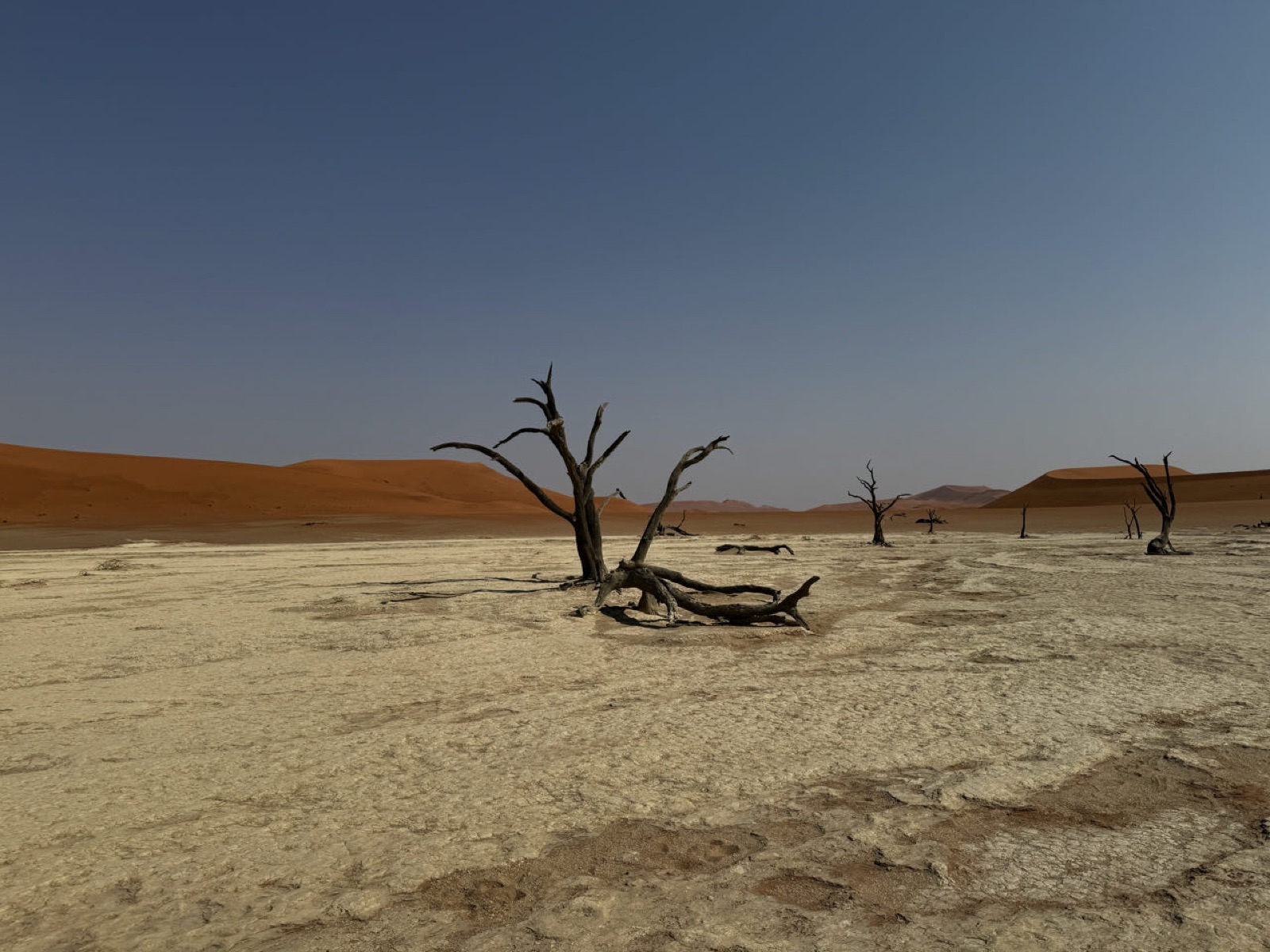
The next morning we walked into Deadvlei with our guide Castro and a couple of fellow travelers from Singapore. Deadvlei is a white clay pan ringed by some of the tallest dunes in the world, scattered with camelthorn trees that died centuries ago and never decayed.
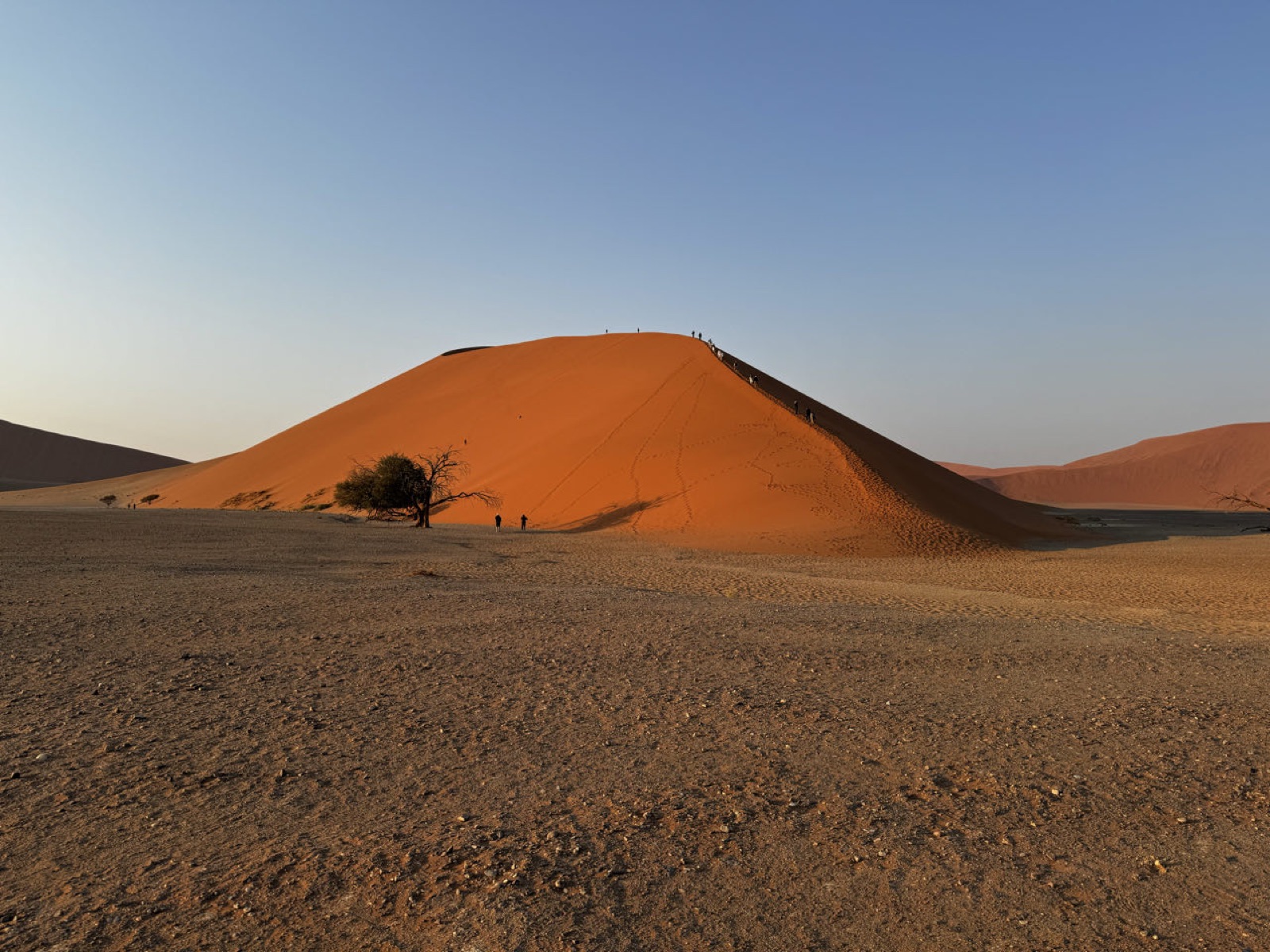
The rest of the day was Sesriem Canyon (definitely worth visiting to learn about the catfish’s fascinating lifecycle), a troop of baboons, and a lot of very good food. That night, with no light pollution, the Milky Way was bright enough to photograph from camp. The next morning, hot air balloons drifted over the desert at sunrise as we packed up.
To the coast#
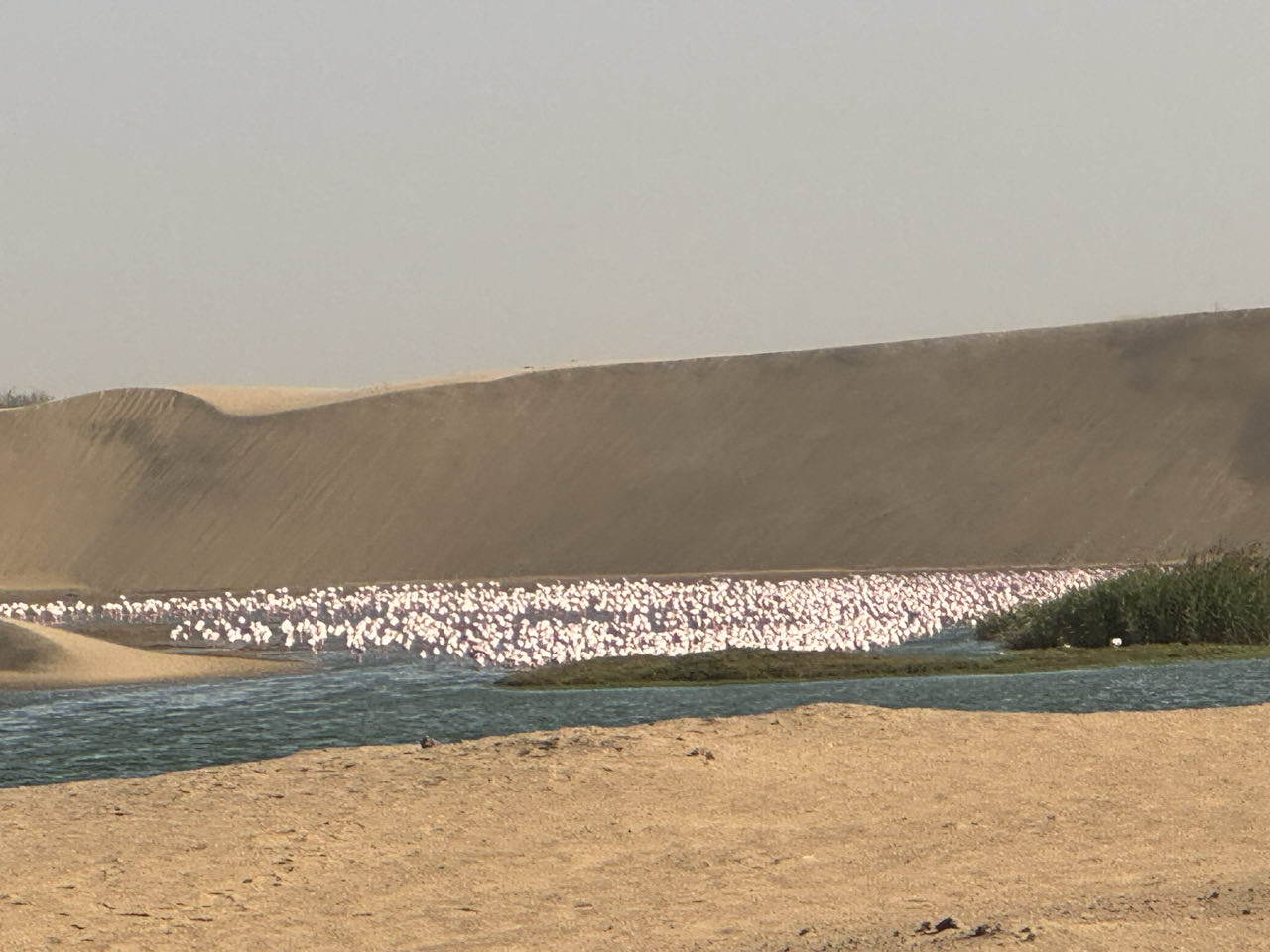
The road to Swakopmund crosses the Tropic of Capricorn at a sign covered in years of travelers’ stickers. It then climbs over Gaub Pass and drops toward the Atlantic. We detoured to the moonscape and to Walvis Bay, where the lagoon was packed with flamingos.
Swakopmund is a bit of a strange town: palm-lined streets, German colonial buildings, and a red-and-white lighthouse, all sitting at the edge of a desert. There’s also a train through the desert. The Germans thought this would be an effective means of transportation, but the desert had other ideas and ultimately swallowed up the tracks. A visit to the Swakopmund railway station provides a glimpse into the engineering hubris.
Sandwich Harbour and the living desert#
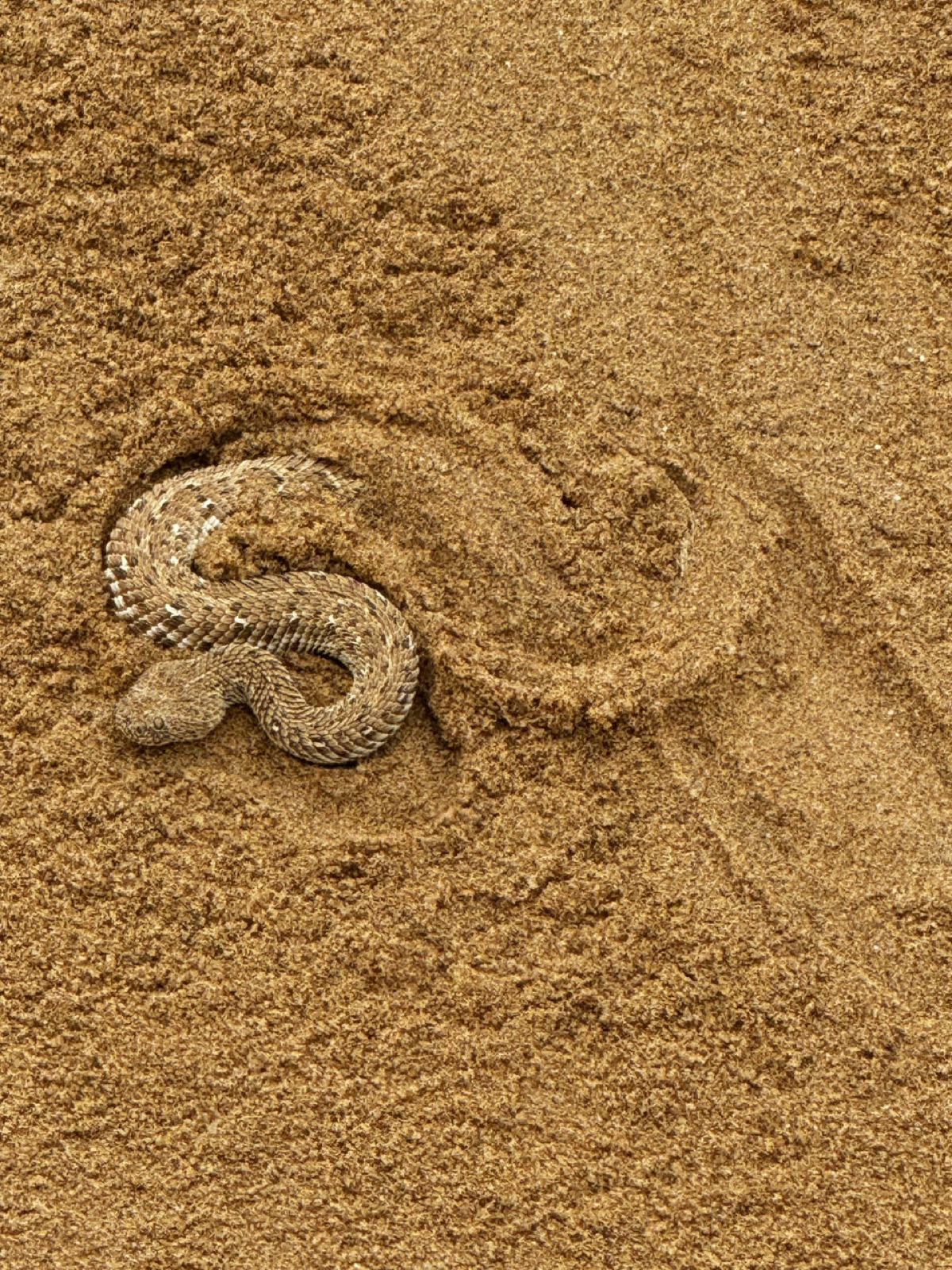
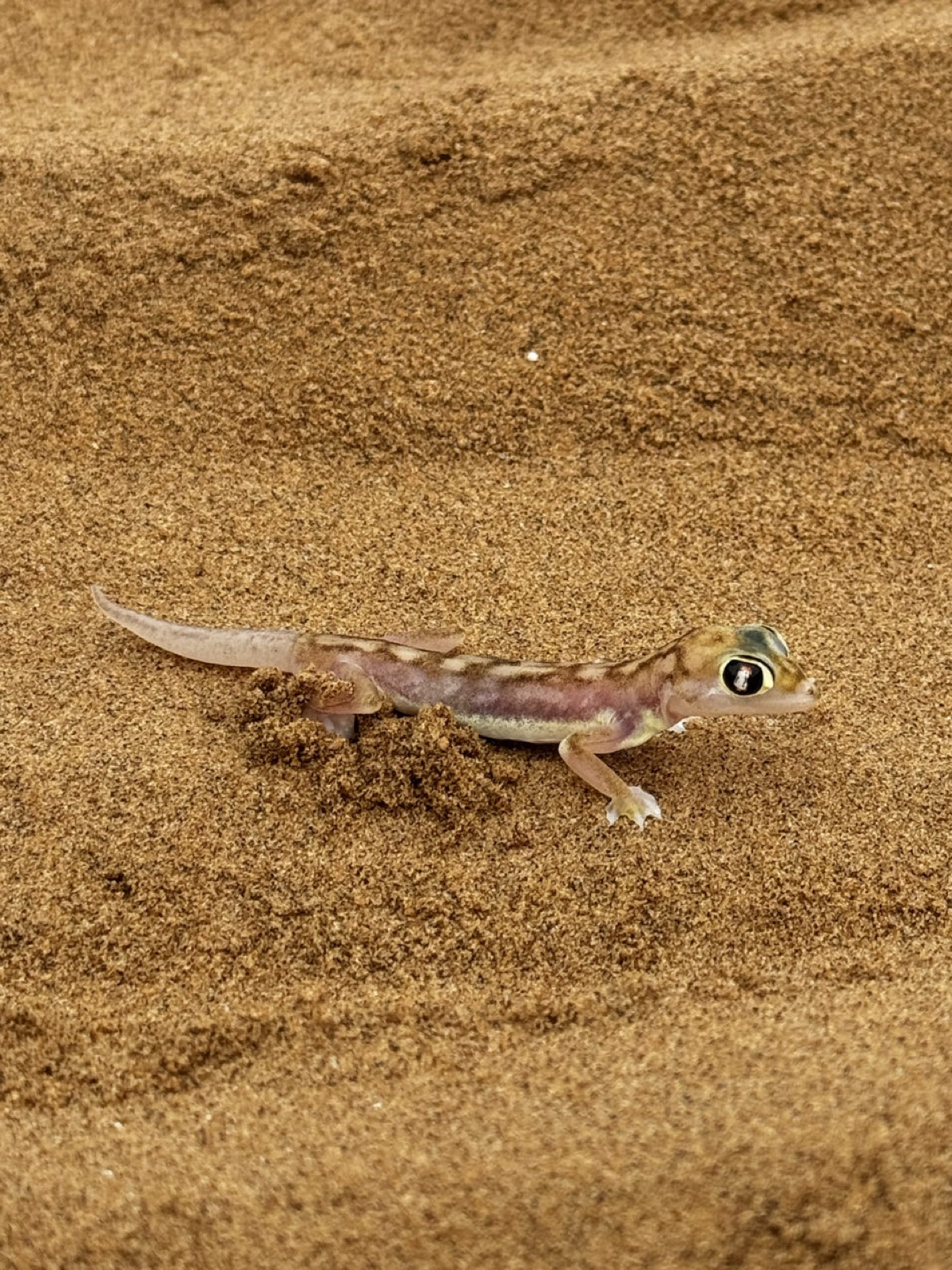
Our day with Charley’s Desert Tours was the surprise of the trip. The dunes look empty, but they’re full of life if you know where to look. Our guide found a sidewinder adder buried in the sand with only its eyes showing. Nearby were translucent dune geckos and a skink that he scooped up and held in his palm, and later a chameleon. Highly recommended.
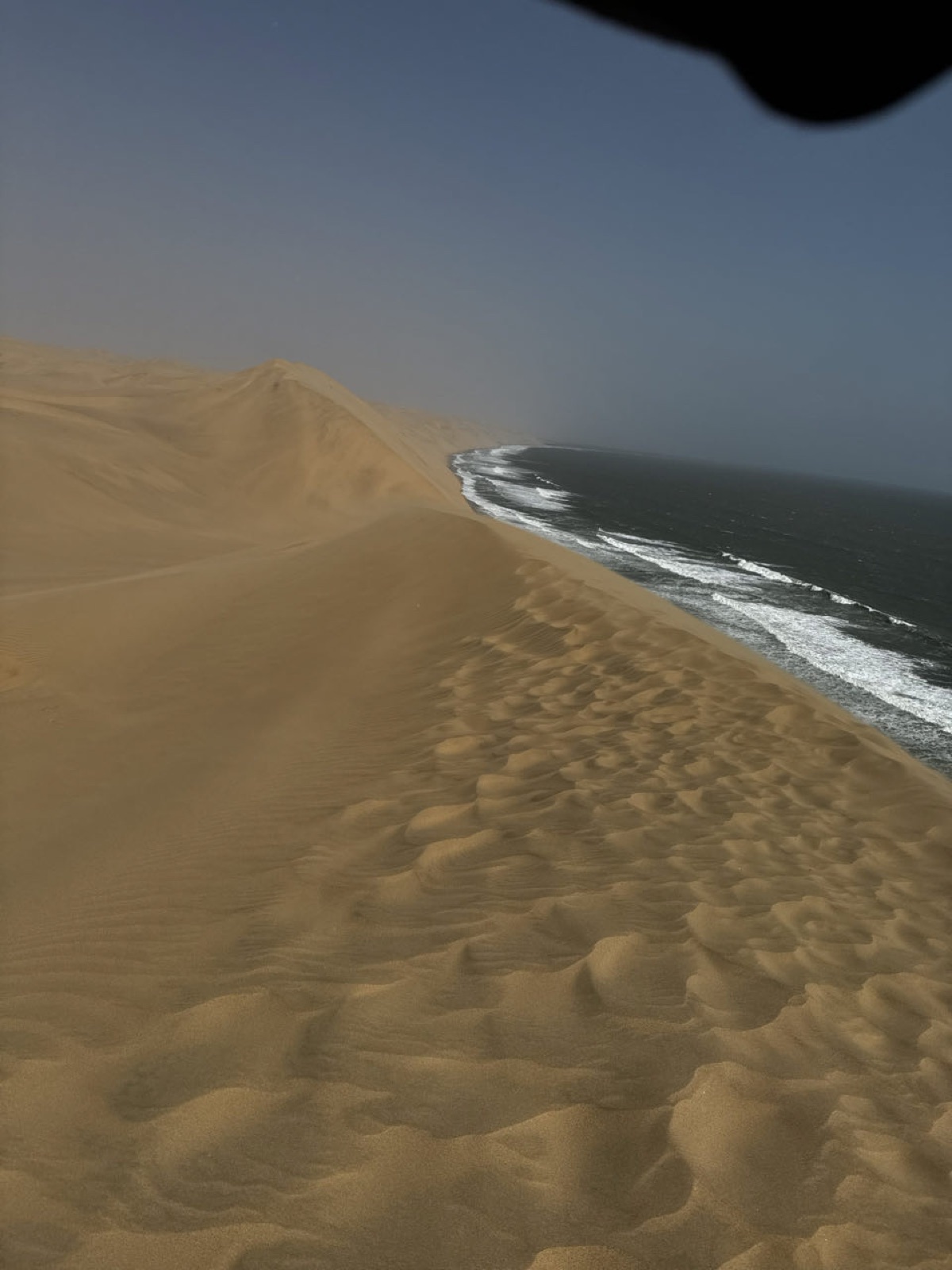
Then came Sandwich Harbour, where the dunes run straight into the ocean. Up close, the sand is flecked pink with garnet.
That evening Paul from Empire Safaris took us to the township to share authentic food over dinner, in a restaurant with every wall covered in chalk signatures from visitors around the globe.
Damaraland#
On the way out of town we stopped at the Kristall Galerie. It holds the largest known quartz crystal cluster on display, about 14 tonnes. Then we headed north into Damaraland, past roadside stone stalls watched over by scarecrow “sellers,” elephant-crossing signs, and huge piles of granite boulders.
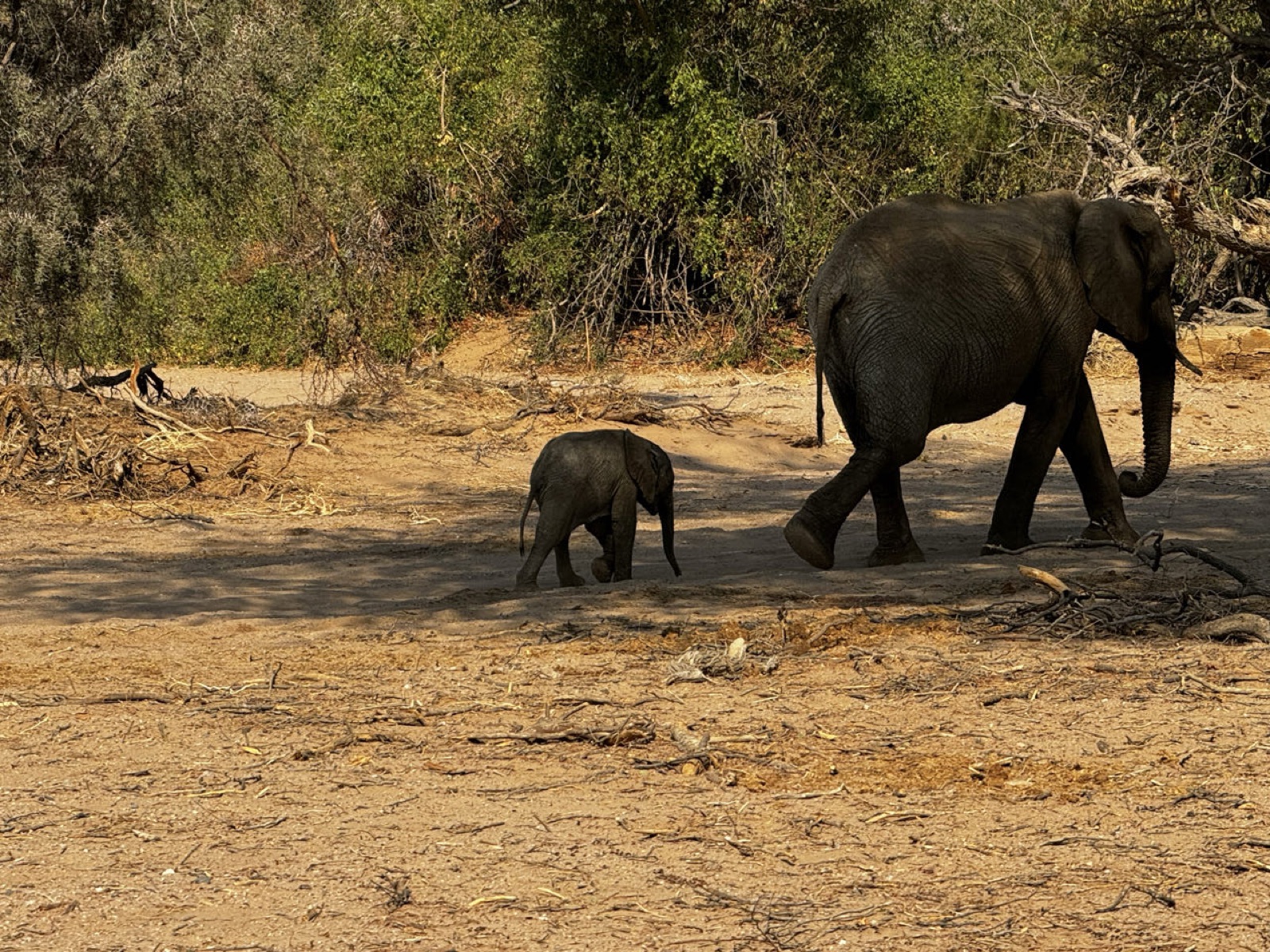
Damaraland was where we tracked desert elephants. They have larger foot pads for walking on sand and longer front legs than other elephants. We found a mother and calf moving through a dry riverbed, and a group of ostriches out on the open plain.
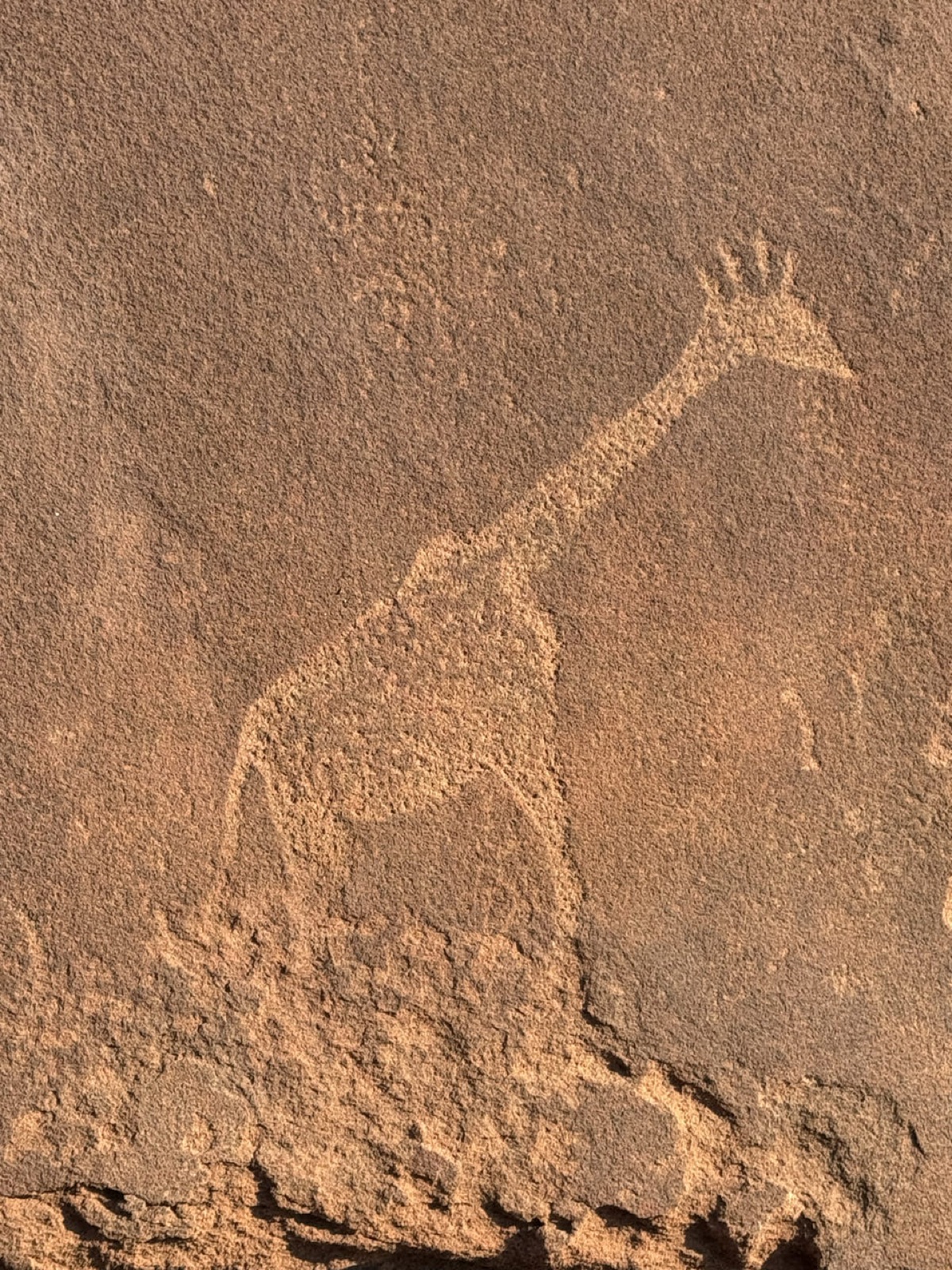
In the afternoon our guide Nafta showed us ancient rock engravings of giraffes, lions, and antelope. He also showed us the smelly shepherd’s tree, and explained that waterholes drawn with circles in the engravings were permanent ones.
Madisa Camp#
Our base in Damaraland was Madisa Camp, and it was one of our favorite stops of the whole trip. The camp is tucked into a jumble of giant granite boulders, with a small pool and campsites spread out on the sand below.
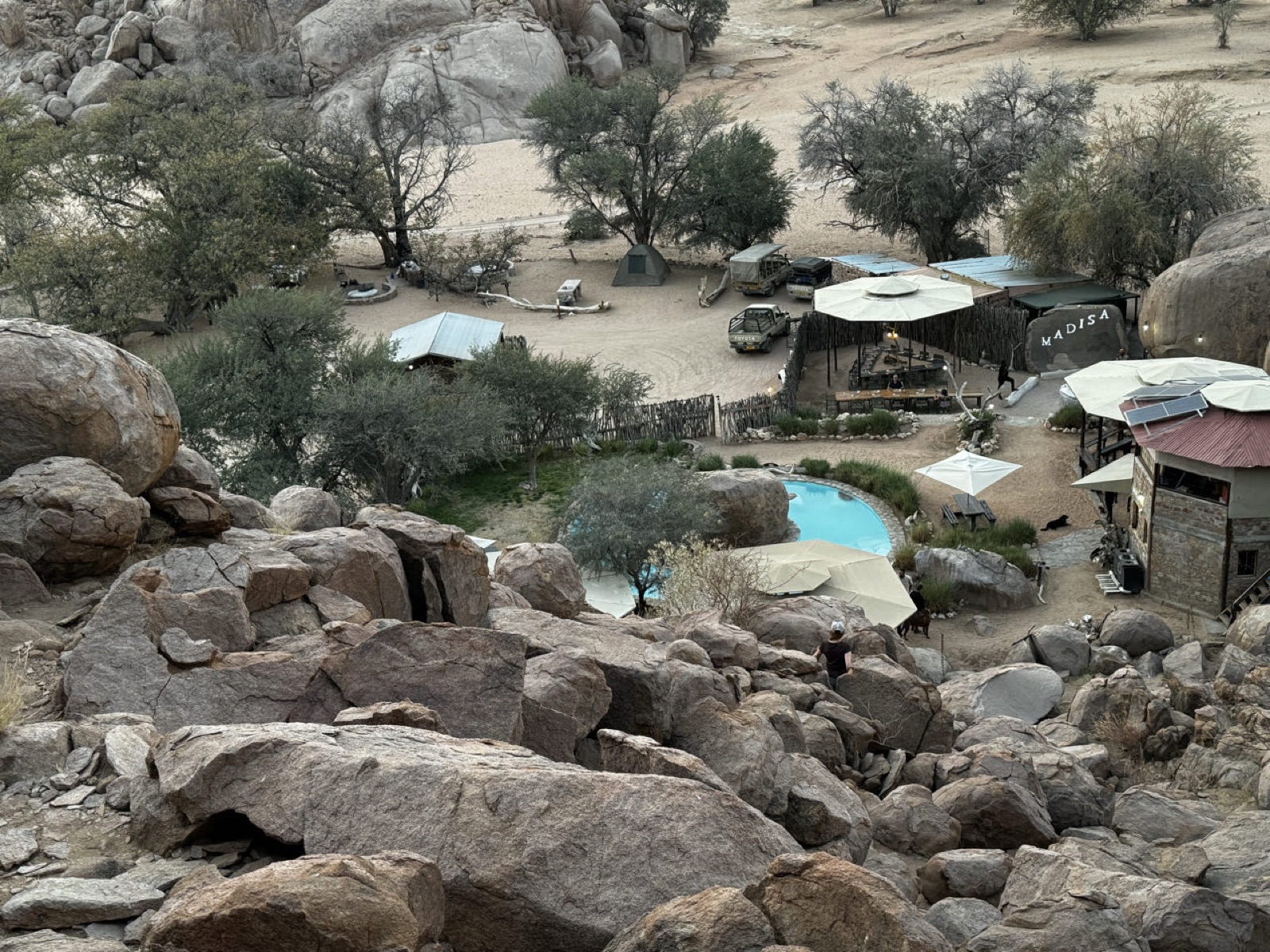
Our campsite had its own stone braai, so we had a braai dinner under the stars. Breakfast was outside among the rocks, where the camp’s ridgeback pups worked the crowd: breakfast is the most important meal of the day because that’s when the pups have the best chance at free food.
The camp has a sense of humor. A hand-painted “weather station” sign explains: if the rock is wet, it’s raining. Old car doors are painted with advice like “Always carry a flask of whiskey in case of snakebite, and furthermore always carry a small snake.”
The best part was climbing the boulders above camp at sunrise and watching the light come up over the plains, with a lizard warming itself on the granite next to us.
On the way to Etosha we had a late lunch at Outjo Bakkery. Great food, including a truly exceptional Spaghetti Bolognese.
Etosha#
Etosha deserves every bit of its reputation. On our first day we were at the gate at 6:45 AM and drove the south and central part of the park until we barely made it out the Von Lindequist Gate, ten minutes before it closed at sunset.
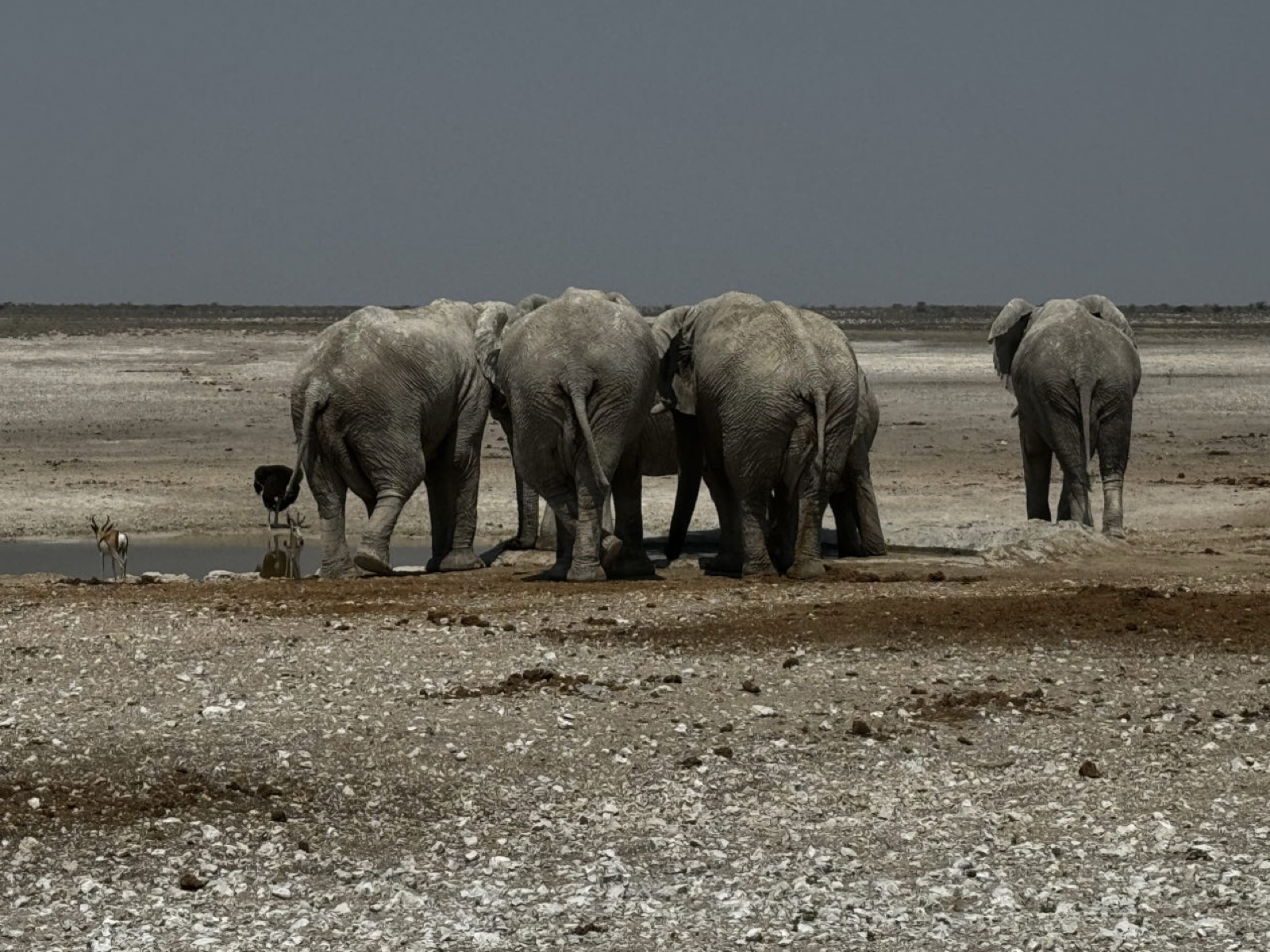
The elephants here are chalk-white from rolling in the pan dust. We also saw impala, kudu, giraffes, oryx, springbok, a couple of rhinos, a kori bustard, and a snake eagle. The day ended with an elephant traffic jam on the road out.
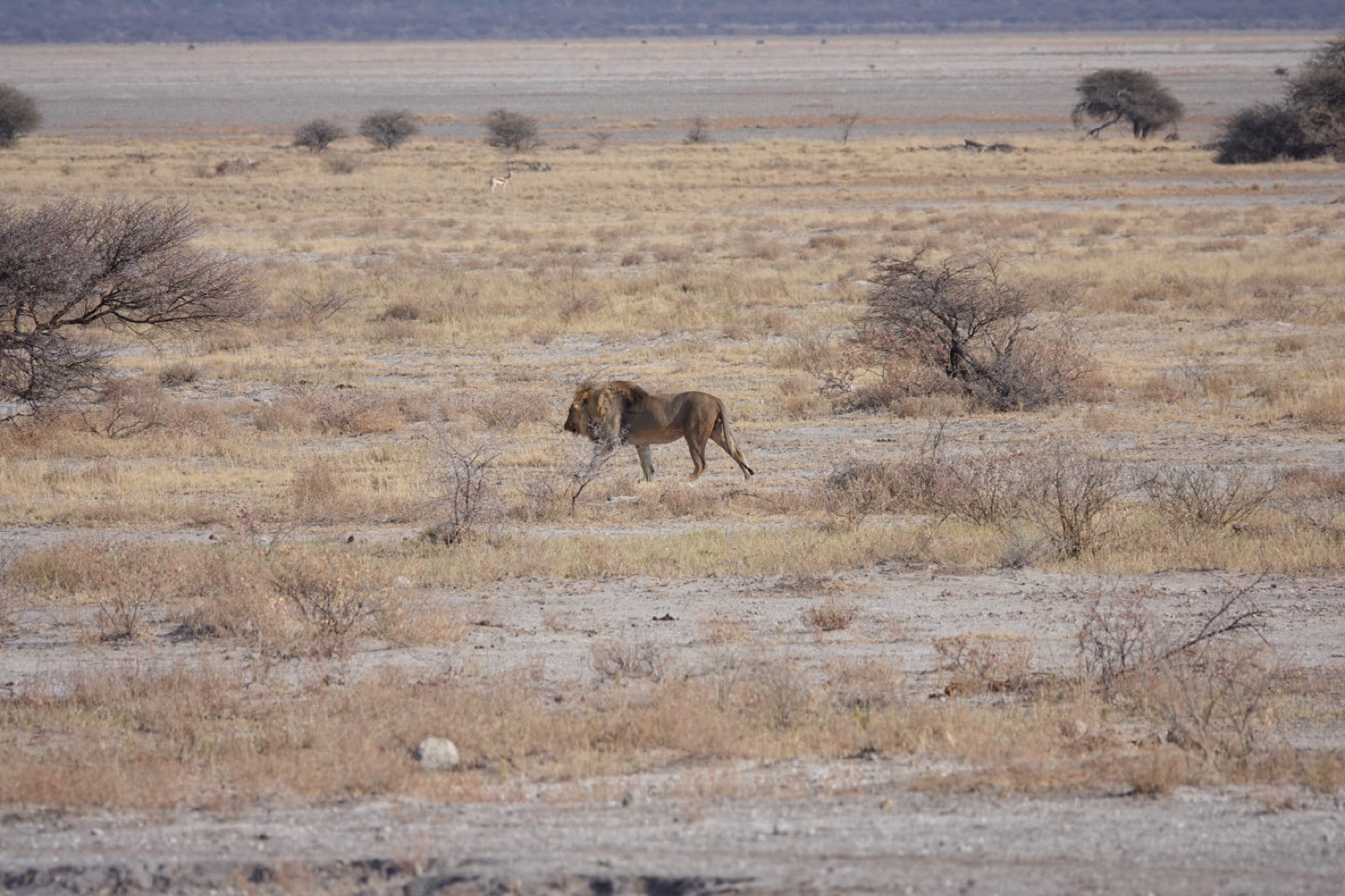
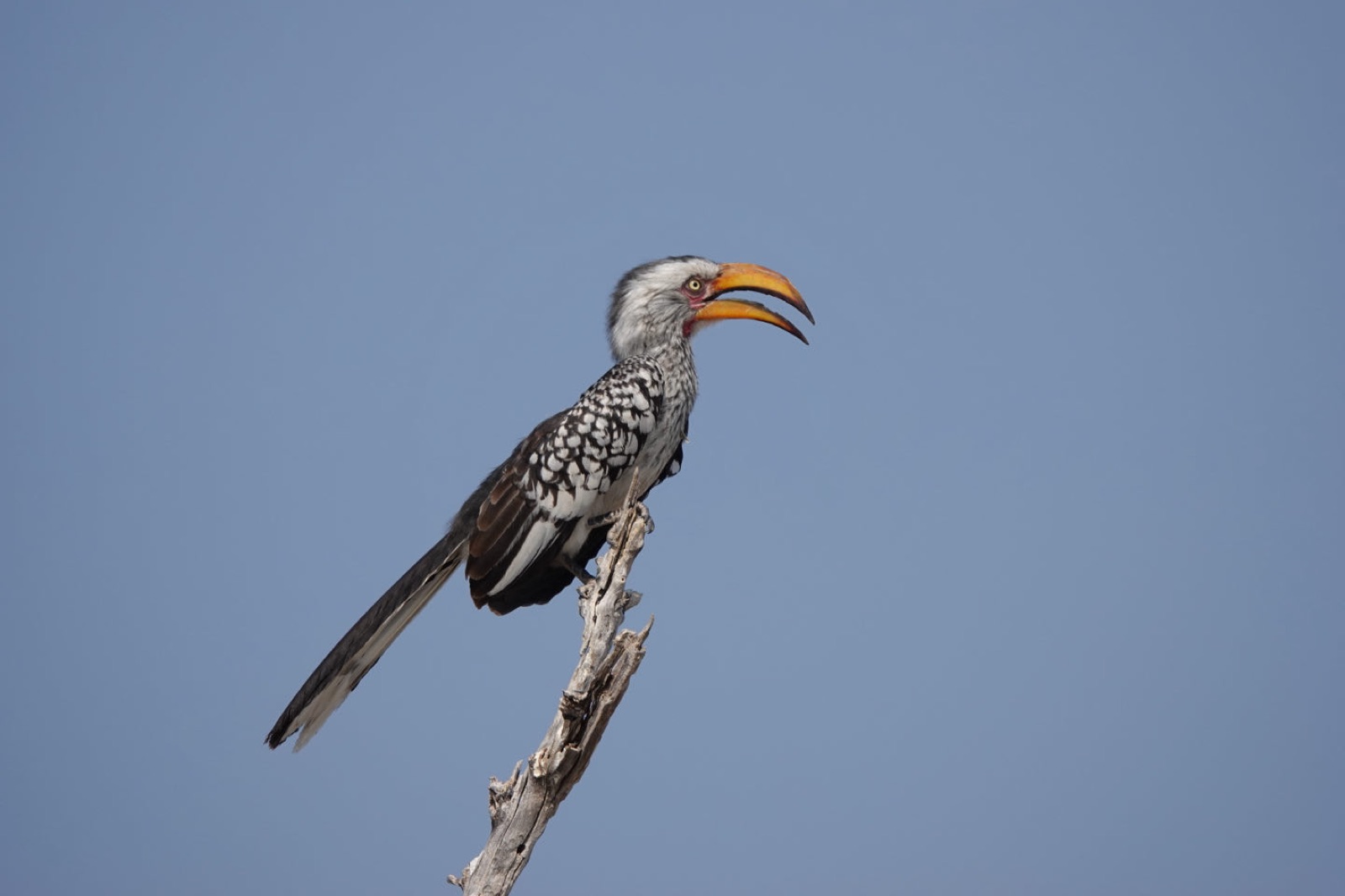
The next morning we did a half-day game drive with guide Eddy Vaino, who found us cheetahs and a male lion strolling across the grassland. We also saw kudu and springbok crowding a waterhole, vultures on their nests, and bee-eaters. That afternoon we drove ourselves through the golden hour and found zebra at a waterhole, a yellow-billed hornbill, and a pale chanting goshawk.
Our last morning in the park was the moment of the trip. Lionesses went after a giraffe right in the middle of the road, and the giraffe stood its ground and fought them off. A few minutes later an elephant scratched itself on a termite mound as if nothing had happened.
From there it was the long drive back to Windhoek and a morning flight to Victoria Falls.
If you’re going#
- We had a great experience with Africar. Our Hilux was a great truck. You can’t buy one in the US because of the Chicken Tax, and its cab had much more headroom than a Tacoma.
- Pay for Tracks4Africa maps. Download the maps in advance.
- Get comfortable managing tire pressure. You’ll be adjusting it for gravel and sand.
- Get a truck with dual gas tanks. Distances between fuel stops are long. Always fill up & we had good luck with Puma stations.
- Always drive with the canopy windows closed, or everything in the back will be coated in dust.
- Buy mopane wood if you plan to braai. It’s incredibly hard and makes for a fantastic braai. Braai and Beer are a way of life.
- Pick n Pay is great for groceries.
- In Etosha, watch the clock. The gates close at sunset, and the lodges outside the park can be another hour or more away. Driving at night is dicey because there is often livestock or wild animals cross the street.
- Book a guide at least once. Our best sightings came from Charley’s Desert Tours, Nafta in Damaraland, and Eddy Vaino in Etosha. They spot things you’ll drive right past. Guides communicate with each other to share sightings.
- Unsolicited: PolarSteps (journaling) and Tripsy (planning) are great travel apps.